How to Recover, Learn and Turn It Into an Advantage
You walk out of the interview replaying the same moment over and over again.
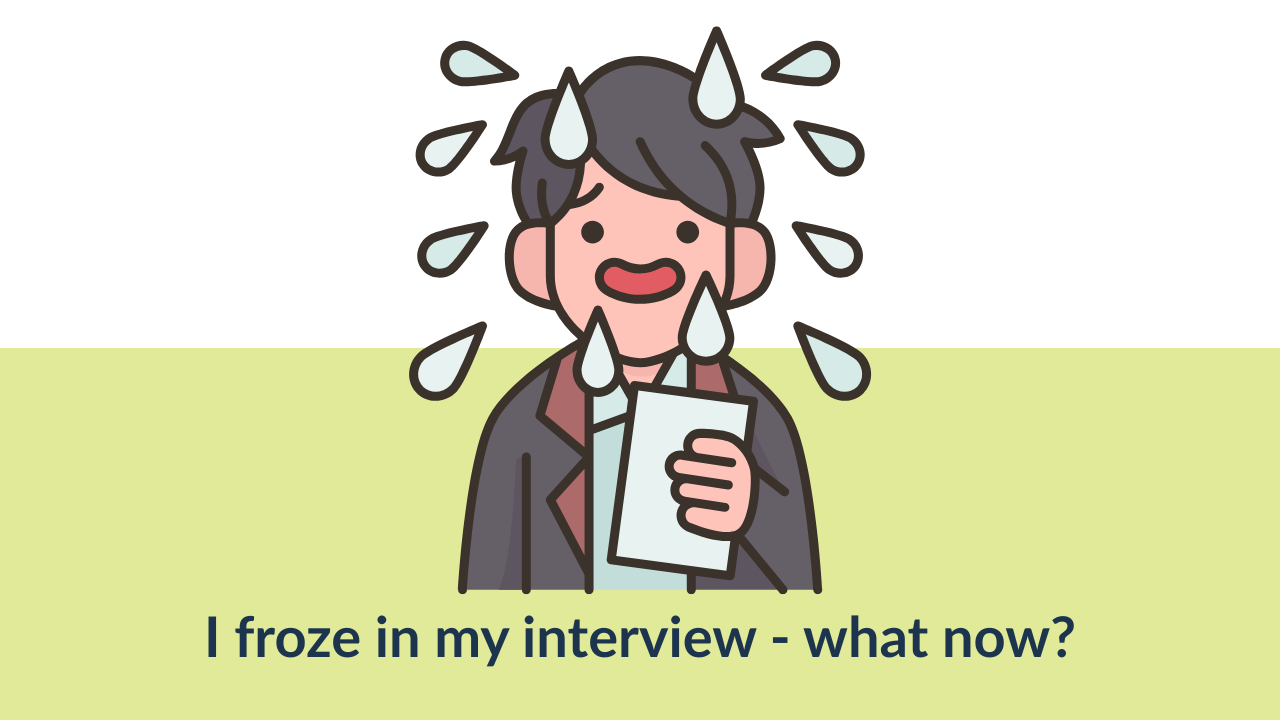
The question caught you off guard. Your mind went blank. You froze.
It’s one of the most frustrating interview experiences because it feels final. Many candidates leave convinced they’ve ruined their chances, that one moment erased all the preparation, effort, and potential they brought into the room.
But freezing in an interview is far more common than people admit, and it’s rarely the dealbreaker candidates think it is.
What matters is not whether you froze, but how you understand it, respond to it, and prepare differently next time.
Why This Is So Difficult
Freezing in an interview is not about intelligence or competence. It’s about pressure combined with uncertainty.
Common misconceptions
Many candidates believe:
- Strong candidates always have instant answers
- Pausing equals incompetence
- Interviewers expect perfection
- One bad answer cancels everything else
These beliefs create a mental trap: when something unexpected happens, the fear of failure takes over.
What people get wrong
Most interview preparation focuses on what to say, not how to think under pressure. Candidates memorize answers, frameworks, and examples, but don’t train for moments when those scripts fail.
When the question doesn’t match the preparation, the brain struggles to adapt.
The emotional blockers behind freezing
Freezing is often triggered by:
- Fear of being judged
- Overthinking instead of responding
- Trying to sound impressive rather than clear
- Interpreting silence as failure
- High self-expectations, especially among high performers
Neurologically, this is the body’s fight-flight-freeze response. Under stress, cognitive flexibility drops. Even experienced professionals can blank when pressure spikes.
The key insight: freezing is a stress response, not a skill gap.
How Employers Actually Think
This is where reality diverges sharply from candidate assumptions.
What interviewers are really evaluating
Hiring managers are not scoring you on flawless delivery. They’re assessing:
- How you handle uncertainty
- How you communicate under pressure
- How you recover from setbacks
- Whether you can think clearly in real situations
In real jobs, people don’t have perfect answers on demand. Interviewers know this.
Hidden expectations
A pause, a moment of reflection, or even asking for a second to think is normal — especially in behavioral, case, or situational interviews.
What stands out positively is:
- Self-awareness
- Structured thinking
- Calm recovery
- Honest communication
What they don’t care about
Interviewers generally don’t care about:
- Minor hesitation
- A less-than-perfect example
- Short pauses
- Admitting you need a moment
What raises concern is panic, rambling, or completely disengaging after the freeze.
In other words, recovery matters more than the freeze itself.
The UPLY Framework for This Situation
At UPLY, we break this situation down into a repeatable recovery framework. The goal is not to eliminate freezing entirely — it’s to stay effective when it happens.
The UPLY Recovery Framework
- Pause deliberately
Take a breath. A short pause shows composure, not weakness. - Acknowledge the moment
Simple phrases like:- “That’s a great question, let me think for a second”
- “I want to structure my thoughts before answering”
instantly reset the interaction.
- Create structure
Even a simple structure (“three points” or “first, second, third”) gives you control and clarity. - Focus on direction, not perfection
Show how you think, prioritize, and reason, not just the final answer. - Close with confidence
End your response clearly, even if it wasn’t perfect. A strong close leaves a strong impression.
This framework works because it mirrors how strong professionals operate in real work situations, under uncertainty, with limited information, and without scripts.
Examples
Before: Weak Response
The interviewer asks a behavioral question.
Silence. Nervous laughter.
“Uh… I’m not really sure… I guess I would… yeah.”
This response signals:
- Loss of control
- Rising anxiety
- Low confidence, even if the candidate is capable
After: Stronger Response
“That’s a good question. Let me take a moment to structure my thoughts.
In a situation like this, I’d focus on three things…”
Why the improved response works
- The pause is intentional, not awkward
- The structure creates clarity
- The interviewer sees composure under pressure
- The candidate regains authority in the conversation
The content may not be perfect, but the handling of the moment is.
Technical or Case Interview
Poor reaction:
“I’m not sure… I don’t really remember the formula.”
Improved reaction:
“I don’t recall the exact formula off the top of my head, but here’s how I would approach the problem logically…”
Interviewers often value reasoning over recall, especially in complex roles.
Can You Recover After the Interview?
Many candidates wonder if they should “fix” a freeze afterward.
When follow-up helps
- If you froze but later realized you could clarify your thinking
- If you want to reinforce your interest and professionalism
A short follow-up note can help:
“I’ve been reflecting on our conversation and wanted to briefly add to my answer regarding…”
What not to do
- Don’t apologize excessively
- Don’t highlight your mistake emotionally
- Don’t explain anxiety or stress
The goal is clarity, not justification.
How to Practice This
Freezing is not solved by memorizing more answers. It’s solved by practicing recovery under pressure.
Self-practice tips
- Practice answering unexpected questions aloud
- Limit preparation time to simulate pressure
- Train yourself to pause before speaking
- Practice acknowledging uncertainty calmly
- Record yourself responding and review your delivery
Common mistakes to avoid
- Over-scripted answers
- Avoiding difficult questions
- Trying to “talk through” panic
- Interpreting hesitation as failure
The real skill is staying composed when things don’t go perfectly, because they rarely do.
Practice It in a Real Simulation
Reading helps. Practicing changes outcomes.
UPLY’s interactive interview simulations are designed to recreate real pressure moments — including freezes, follow-ups, and unexpected questions.
You don’t just get feedback on what you said, but on how you handled the situation, where you stayed composed, and where you can improve.
Practice this exact scenario in a realistic simulation and learn how to recover with confidence next time.